Showing posts with label Marie Spartali Stillman. Show all posts

Friday, 5 December 2025

Friday 5th December - Love Sonnets

 Well, here we are at the end of our first week of Blogvent, and I'm off to London tomorrow so I better sort something out for that too.  In the meantime, here is today's offering...

Love Sonnets (1894) Marie Spartali Stillman

I actually had the choice of a couple of Stillmans for this Blogvent, but we'll start with Love Sonnets.  We have a romantic young lady reading her love sonnets while clutching what I am assuming are marigolds.  They are often read as being symbols of purity and divinity so we can guess she is reading some lovely poems rather than anything naughty. There is also the implication that marigolds bloom on the first day of the month so I wonder if our lass is in love for the first time. Also, as always, I am wondering about the black jacket (with those very lovely buttoned sleeves) so I was wondering if she has been widowed or had a bereavement and this is her first love afterwards.


Cloister Lilies (1891)

I'm not sure if Marie Stillman was going through a phase of women-reading-while-clutching-flowers but here is another one. This time our lass is reading a far more religious text, as signified by the lilies clutched in her had.  I really love the amber beads looped round her other wrist. 

Beatrice (1895)

I've always felt that Marie Stillman's female subjects in this vein are the children of Rossetti's 1860 Venetian period, and the inclusion of Beatrice in her subjects underlines this. However, different from Rossetti, Beatrice is the main character here, not seen through the eyes of Dante, but a woman on her own, having a moment with her book.  She is not dying poetically with a poppy, nor lying in state being kissed by Love, nor ignoring Dante on a bridge. She is thinking about something she has read, her finger tracing the passage that has captivated her. In fact, all three of our readers are reading texts that are absorbing them, giving them pause for thought and possibly in the case of Love Sonnets and Beatrice the thoughts aren't all joyful. Our women are turning to books, to knowledge, to solve their problems, answer their questions, and give them guidance in times of need.

Brewing the Love Philtre (c.1870)

For Marie Stillman, books provide the answers to questions, giving women the independence to get on with their lives. Whether it is choosing a new love, capturing a new love or being led into or away from temptation, there is a book to help.  So our maidens, be they saintly, witchy or very human, are free to make their own decisions without the need to ask a man. Not all of these decisions are going to be correct (I mean, honestly, I'm not sure love potions are ever a sustainable option) but they are theirs to make and take the consequences.

See you tomorrow.

Sunday, 16 December 2018

Sunday 16th December: Christina Spartali

Ah, Sunday!  Despite having to go and find some bathroom tiles today, I have the luxury of spending the day finding a long and happily-lived woman who had a jolly and fulfilled life and did a bit of modelling.  

Or I could bring you Christina Spartali...

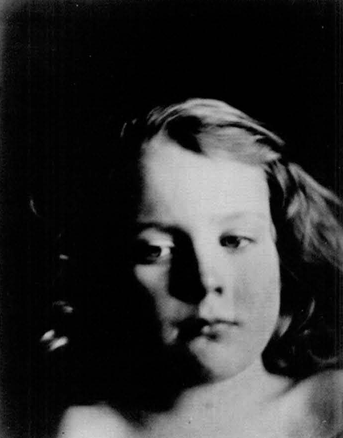
Christina Spartali (1868) Julia Margaret Cameron
The surname will no doubt be familiar to everyone, and Christina was of course sister of Marie, artist and fellow victim of Julia Margaret Cameron.  When writing Girl Gang I did wonder why, when Marie Spartali and her cousins all became involved in the art world, why Christina didn't.  What did Christina do?

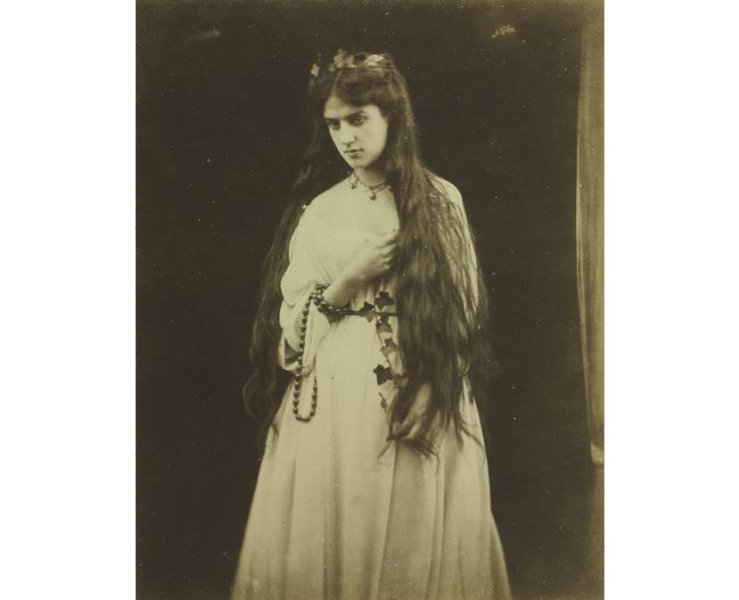
Christina Spartali (March 1868) Julia Margaret Cameron
Christina was born on 19th May 1846, younger sister of Marie who was 2 years older.  Her parents were Michael, a Greek merchant and his wife Euphrosyne, and in the 1851 census, Christina and Marie are listed as being born in Tottenham, probably at Page Green where the family were living.  She was followed (shortly after the census) by younger brother Demetrius (1851-1894), then Eustratius (1854-1933) and finally by sister Euphrosyne or Effie (1880-1935).  Holidays were taken on the Isle of Wight at the family's other home (the one with the vineyard) and it was there, in her mid-20s, that Christina fell under the lens of Mrs Cameron.  However, unlike the proliferation of Marie Spartali photographs, only a few of Christina seem to have been taken, which makes you wonder if she didn't find the process interesting or didn't enjoy modelling, both of which are raised in her most famous modelling job...

Rose and Gold: The Princess from the Land of Porcelain (1863-5) James Abbot McNeill Whistler
Begun possibly as a portrait of Christina, her father refused to buy it when it was finished, but Whistler exhibited it as a portrait of 'Miss S-' knowing that the viewers would be able to recognise Christina.  As I wrote in this post about Rosa Corder, Whistler was not the most humane artist to pose for and his treatment of Christina was no better, making her stand for hours on end while he painted and repainted the same piece of canvas. Marie Spartali told Whistler biographers Elizabeth Robins Pennell and Joseph Pennell that her sister posed for hours in a semi-darkened room until she became ill (possibly from peritonitis).  Another model stepped in to model the gown while Christina recovered and Whistler would visit her as she convalesced to draw her face. As this experience pre-dates the photographs by Mrs Cameron, it is possible to see why Christina would not be overly keen to do anymore modelling.

Portrait of a young woman, possibly Christina Spartali (c.1860s) Frederick Shields
The Spartali parents were very concerned with possible suitors for their daughters, or rather keeping them away.  It is very well documented that they did not approve of William Stillman when Marie married him, but even the wealthy and titled Count Eduard Joseph Cahen D'Anvers, a Jewish banker from Belgium, was not good enough for their daughter.  He ran the family business head office in Paris, and it was there that he and Christina eloped in December of 1868.  He had been given the title of Marquis di Torre Alfina, so Christina found herself Countess Cahen d'Anvers, society hostess in Paris.  In the British newspaper there are a flurry of interested pieces about how society in Paris conducted itself and Christina, at their house at the Bergeries entertained for the summer season.  When the French parliament went into recess, a comite de permanence (the once who got to stay behind and make sure nothing happened) were amused by what the Yorkshire Post  referred to as 'Parliamentary belles', which included Christina.

Portrait of a Lady, possibly the Artist's Sister (nd) Marie Spartali Stillman
It is uncertain when or why Christina started to use chloral.  Dante Gabriel Rossetti's habit was allegedly started via William Stillman, so possibly it was from her brother-in-law that Christina first acquired the pain killer, but she sadly fell victim to its addictive qualities.  Marie Stillman was sent out to Paris to help her sister, who was prone to illness (possibly due to the chloral) and according to Angela Thirlwell's excellent book on Ford Madox Brown, Marie found her brother-in-law lacklustre company.  Possibly, boredom drove  Christina's addiction, possibly the acknowledgement that she had escaped over-protective parents only to find herself in a highly gilded cage, far away from friends and family.

Christina Spartali (1868) Julia Margaret Cameron
Poor Christina's life now seems a little devoid of detail, all we have are the parties she held and the few pictures she posed for, unhappily.  A son, Rudolfo was born, possibly around 1871, when Christina was so ill that a reconciliation with her parents occurred.  I am grateful to David Elliott for including a little more about her in his biography of the Stillmans, if it is only to do with her final years.  In 1880, the Spartali's cousin Aglaia Coronio wrote to Rossetti asking if he had that Christina was seeking a divorce from 'that horrible little Jew, her husband' to which Rossetti (who also wasn't a fan) replied 'I should judge it high time'.  However, that divorce was not to be and the entertaining continued until 1884 when Christina died.  Most sources list her death as from 'unexplained' causes, and William Michael Rossetti referred to it being of a 'cataleptical' nature.  While there was a rumour that she had died in childbirth, Elliott's account tells of an overdose (accidental or otherwise) of chloral, discreetly covered up by family and friends.  Her body was brought home and buried at the Greek Cemetery in West Norwood, reunited with her family again.

Interestingly, while reading the details in the newspapers of Count Eduardo's will after his death in 1894, he left money to his sister-in-law, which leads me to wonder if they mean Marie Stillman.  If so, he obviously had a better opinion of her then she had of him.

See you tomorrow.

Saturday, 15 December 2018

Saturday 15th December: Annie Keene

Only ten days to Christmas and only nine Blogvents left and so let's crack on with our lady of the day and she will be a very familiar face to all Cameron fans...

Mountain Nymph Sweet Liberty (1866) Julia Margaret Cameron
The model known simply as 'Mrs Keene' is the most striking of Julia Margaret Cameron's models with her angular face and direct gaze.  Not much was really known about her at the time, other than she was one of the few 'professional' models that Mrs Cameron ever employed, but the effect she had on the photographer's art was stunning.  When Mrs Cameron sent this photograph to her old friend Sir John Herschel (whose work on lenses had been instrumental in Cameron's interest in photography), he wrote back 'That head of the 'Mountain Nymph Sweet Liberty' ... is really a most astonishing piece of high relief - she is absolutely alive and thrusting out her head from the paper into the air.'  She truly is an arresting woman, so who was Mrs Keene?

Cassiopoeia (1866) Julia Margaret Cameron
Annie Edwards was born in the village of Albrighton in Shropshire, in the autumn of 1842.  Her parents, George and Mary, were rural-types, born and married within a few miles of where they settled, had kids and probably died.  George was a labourer, a bricklayer, and Annie was the eldest of the couples' five children, four daughters and, finally, one son.  It is possible Annie moved south with a family she went into service with.  In the 1861 census, there is a Shropshire family, the Langslows, who had moved to London between the 1851 census and the 1861 census and in their household staff is 19 year old Ann Edwards, also from Shropshire. Annie had been removed to the big city.

Mrs Keene (1866) Julia Margaret Cameron
Charles Joseph Keene was an amateur artist and inventor from Bristol.  In 1862 he registered a patent for 'a winding apparatus for raising and lowering canvas from easels' and by the 1861 census he too had made his way to London, staying in lodgings in St Pancras and working as a manager of a fur warehouse.  Annie and Charles were married in the summer of 1865 and in the 1871 census, Annie Keene is listed as a 'model of the head'.  The couple's daughters, Marie Taigi, Laura, Jessie and Elizabeth (Bessie), were all to take their career tips from their mother. Taigi (1866-1938), named for a Catholic saint Maria Taigi, became an actress during the 1880s until her marriage.  She was on the stage with her husband, Henry Vibart.  Laura (1867-1955) modelled for James Whistler, marrying  Thomas Bagshawe and by 1911, John Bernard Bagshawe (future vicar) had been born.  Jessie (1872-1950) modelled for, then married, the artist William Wontner, and Bessie became one of Burne-Jones' favourite models.  Although Love Among the Ruins is thought to feature the features of Maria Zambaco, in the later oil version (now at Wightwick Manor), it is the lovely Bessie instead.

Love Among the Ruins (1894) Edward Burne-Jones
As much as I'd love to dig into the lives of her girls (there is a splendid blog here that goes into their lives and that of Annie too), I only have today and so I shall concentrate on Annie as we are not done yet.  Casually reading September 1904's The Strand (as you do), I was fascinated to read an article all about artist's models which opened some very interesting doors and featured our Mrs Keene quite extensively...

Group (Mrs Keene and May Prinsep) (1866-70) Julia Margaret Cameron
 The interesting thing about Annie Keene is normally when I research models I get excited when I find a photograph of them.  With Annie, it's the other way around and although I had read she had been a model for other painters, thanks to The Strand I found some rather nice paintings.

Study for A Hundred Years Ago (1871) William Quiller Orcharson
She is the beautiful woman gazing at a painting in A Hundred Years Ago (1871) and the woman on the beach in Flotsam and Jetsam...

Flotsam and Jetsam (1876) William Quiller Orchardson
She was a model for Louise Jopling, and Marie Spartali Stillman too (according to Angela Thirlwell's book Into the Frame) and probably posed for Saint Barbara

St Barbara (1870s) Marie Spartali Stillman
 It could have been that Stillman met Annie while posing for Mrs Cameron as both were models for Cameron at around the same time.

Lady Clara Vere de Vere (1866) Julia Margaret Cameron
Annie and Charles lived on at Maitland Park Villas in the St Pancras area of London.  Charles became an accountant to a debt collector, then they retired to Hampstead, at 12 Hill Park Gardens, where they are listed in the 1901 census.  However, on 6th November 1901, Annie died, aged 59.  She left £497 to Charles, and a wealth of art her beauty had inspired to the rest of us.

Mrs Keene (1866) Julia Margaret Cameron
See you tomorrow.

Wednesday, 28 November 2018

Cameron and Rossetti

A bit of a holy grail for me is Julia Margaret Cameron's lost image of Christina Rossetti.  We know that Cameron managed to capture an image of the poet as 'Christina Rossetti, profile' is listed on the lid of a negative box.  Whether or not that particular negative or any resultant images survived is another matter.  Questions immediately arise - how would Cameron portray Christina?  Would it be a gravitas-packed image, like those of Tennyson or Browning, or something lighter, prettier, like those of Anny Thackeray?

Robert Browning (1865) Julia Margaret Cameron
Anny Thackeray (1870) Julia Margaret Cameron
Whilst pursuing Miss Rossetti, we have at least the photographs Cameron took of her brother, William Michael, taken in 1865, and in a similar vein to Browning and Tennyson (definitely the same hat)...

William Michael Rossetti, Study 2 (1865) Julia Margaret Cameron
The one Rossetti who escaped her lens was the one she chased the hardest and with whom, arguably she had the most in common.   Julia Margaret Cameron met the Rossetti family when they were drawn into the orbit of Little Holland House in 1856.  The person who had taken him there was fellow Pre-Raphaelite brother, William Holman Hunt. Cameron took Hunt's photograph and his influence in her work is clear from works such as Pre-Raphaelite Study (1870).

William Holman Hunt in Eastern Dress (1864) Julia Margaret Cameron


Pre-Raphaelite Study (1870) Julia Margaret Cameron
Isabella and the Pot of Basil (1868) William Holman Hunt
On paper, Dante Gabriel Rossetti and Julia Margaret Cameron seemed to be kindred spirits.  Both had translated the Gottfried Burger poem 'Lenore', Cameron in 1847, three years after Rossetti's, and both had dedicated great time and effort into illustrations for collections of Tennyson's poetry.  When significant people in their lives had died prematurely, both had reacted creatively, capturing their deaths in striking artistic pieces, Rossetti with Beata Beatrix and Cameron with the post-mortem photographs of Adeline Clogstoun.  Yet, Rossetti resisted, despite profiting from the acquaintance, and Cameron found it difficult to cease her pursuit.

The Rossetti Family (1863) Lewis Carroll
Rossetti had a well-established relationship with photography.  He welcomed Cameron's friend and rival Lewis Carroll in to his home and garden to capture his family (including modest sister Christina in some of the most beautiful portraits you'll see of her), not to mention the epic cycle of photographs of Jane Morris, taken by John Parsons under the direction of Rossetti.  However, his relationship with Mrs Cameron seems to have a double edge to it, in turns warm and retreating, yet undeniably influential.


On the face of it, Rossetti wrote letters to Mrs Cameron filled with friendship and admiration. He writes of her 'beautiful photographs', praising The Kiss of Peace as being 'a most lovely thing' and that one of her photographs was like 'a Lionardo' (sic). It is, of course, possible that the miss spelling is not a coincidence and he was mocking her, but I don't get that impression from the rest of their lettes. She gave him photographs and he allowed her to borrow photographs of his paintings.

The Rosebud Garden of Girls (1868) Julia Margaret Cameron
I think a very interesting aspect of their relationship is that they had such a wide group of shared friends and even people I wouldn't immediately connect with Rossetti were part of the Society that both artists moved in, mostly centred around Tennyson or Little Holland House.  When Rossetti was sent a copy of The Rosebud Garden of Girls as a 'kind present' he was 'half ashamed to accept', he described it as 'full of beauty'.  He writes Nellie and Christina (on the left) would 'bear away the palm' (of beauty), but that the photographer 'is not always a trustworthy reporter', which is an interesting comment because you would think the camera would be trusted (before Photoshop, anyway).  It could have been that Rossetti felt there was no difference between painting and photography in terms of art form and its ability to express and enhance beauty.

Cameron was always a generous friend, a thing that embarrassed people as much as endeared her to them.  She gave Rossetti not only photographs but also an illustrated copy of Edwin the Fair and Philip Van Artevelde by her friend and model Henry Taylor.  There is some disagreement over how many of Cameron's images Rossetti owned, but there are initially seven that Cameron herself gave to Rossetti as presents in 1867, a year after they seem to have started a correspondence.  They are:

Ophelia (1867) Julia Margaret Cameron
Ophelia is the most immediately 'pre-raphaelite' subject, and Rossetti's copy had the following dedication written on it - 'For Dante Gabriel Rossetti with my best remembrance, Julia Margaret Cameron.' The image of Mary Pinnock reminds me of images of Elizabeth Siddal, and the strong focus of the woman without any narrative (the title is almost superfluous, different from the far more dramatic rendering of the subject featuring Emily Peacock) brings to mind Rossetti's 'beauties' of the 1860s.

Rosealba (1867) Julia Margaret Cameron
 This photograph of the model Cyllena Wilson is one of three images that Cameron gave to Rossetti of the girl.  This one is entitled 'Rosealba', referring to the white rose on her dress.  Another a straight portrait of Cyllena.

Cyllena (1867) Julia Margaret Cameron
Rossetti referred to this picture of 'Selina', probably because he heard the photograph's subject referred to before seeing her name written down.  I am unsurprised that Rossetti liked the images and Mrs Cameron was extremely shrewd to choose Cyllena for her gift to Rossetti as the girl is very much like Fanny Cornforth in her broad open face and long flowing hair.  She was also an adventurous soul, but we'll talk about that next month.

Rachel (1867) Julia Margaret Cameron
The most awkward of the portraits of Cyllena is this one, and you have to have pity on girl having to pose for goodness knows how long with that vase on her head.

Kate Keown (1866) Julia Margaret Cameron
A curious inclusion in the collection are the images of children, firstly this one of Kate Keown and the next of Freddy Gould.

Freddy Gould (1866) Julia Margaret Cameron
This two young models are interesting inclusions in the gift as Rossetti is not known for his interest or inclusion of children in his art.  On the surface I suppose Cameron might have been thinking of the angelic figure in Rossetti's  The Girlhood of Mary Virgin (1849), which I can definitely imagine Cameron being influenced and inspired by, but children were never part of Rossetti's artistic vision.

Mignon (1866-7) Julia Margaret Cameron

The Blue Bower (1865) Dante Gabriel Rossetti
The final image of the set given to Rossetti by Cameron was another image of young Kate Keown, but she appears to be playing the part of a little stunner in a pose that is very reminiscent of The Blue Bower of a year earlier.  Even though Mignon is from a session entitled The Minstrel Group (which included both Mary Ryan and Elizabeth Keown as well as Kate), it is only the single figure, posed with a musical instrument that Cameron sends to Rossetti.  It might have been entirely accidental but she appears to have sent him a virginal version of The Blue Bower, just as Rossetti's art was turning from the obvious charms of Fanny Cornforth to the untouchable icy beauty of Alexa Wilding.

Hypatia (1867) Julia Margaret Cameron
Rossetti also received other photographs from Mrs Cameron.  For the portrayal of ancient philosopher Hypatia, Cameron chose Marie Spartali.  A decade later, Spartali would appear in Rossetti's A Vision of Fiammetta, but in 1867 she was an aspiring painter, learning her craft under Ford Madox Brown (just as Rossetti had, sort of) and posing for her Isle of Wight friend, Cameron.  The dress with the criss-cross pattern used in Cameron's photographs reminds me of both Burne-Jones' Sidonia Von Bork 1560 (1860) and Frank Cadogan Cowper's Vanity (1907).  Spartali was also a recipient of Mrs Cameron's famous generosity; in a letter from 1869, Rossetti tells Cameron he will pass a copy of The Kiss of Peace to Spartali when he sees her, a photograph Rossetti considers a 'masterpiece'.

The Kiss of Peace (1869) Julia Margaret Cameron
Beyond the images Rossetti owned (and by his death it is rumoured he owned up to 41 of her prints), the couple shared inspiration.  Many people have commented on the similarities between 'Call, I Follow, I Follow, Let Me Die!' and Beata Beatrix, which were hanged together in a recent exhibition, but exactly who drew inspiration from whom is unclear.  Certainly, Cameron's photograph predates Rossetti's finished oil but his sketches of The Return of Tibullus to Delia, which prefigure Beata Beatrix date from the mid 1850s. I have read people argue the matter both ways - that Cameron saw Beata Beatrix on a visit to Rossetti's studio and that Rossetti received a copy of Cameron's print.


'Call, I Follow, I Follow, Let Me Die!' (1867) Julia Margaret Cameron

Beata Beatrix (1864-70) Dante Gabriel Rossetti
Beyond the purely visual, Cameron found inspiration in the poetry of the Rossetti siblings, starting with the aforementioned Minstrel group, which she based on Christina Rossetti's 'Advent'...

The Minstrel Group (1866) Julia Margaret Cameron
It's not the most obvious tribute to Rossetti's poem and had Cameron not inscribed some prints with 'We sing a slow contented song / and knock at paradise' the connection might not have been made.  I do wonder if sometimes Cameron just named a photo on a whim after the fact, but Mary Ryan and the Keown girls are supposedly the 'patient virgins wise' of the poem.

'And the Stars in her Hair were Seven' (1870) Julia Margaret Cameron
 On more intentional ground, we have Marion 'Pinkie' Ritchie as the Blessed Damozel of Dante Gabriel Rossetti's poem.  It is a beautiful and lesser known of Cameron's photographs and makes the lovely Miss Ritchie look absolutely delightful.  I particularly love the fact that her 'stars' appear to be flowers, and this portrait is softer than others of her as Mary Queen of Scots.  I rather like Pinkie and will be returning to her next month.

Mnemosyne (1868) Julia Margaret Cameron
Mnemosyne (1881) Dante Gabriel Rossetti
Cameron's image of Mnemosyne, the goddess of memory, predates Rossetti's by over a decade and some argue that Rossetti may have been inspired by her image, which was in his collection of prints, although far more likely is that it is a repeat of Astarte Syriaca.   

The Annunciation (1864-5) Julia Margaret Cameron
The real question becomes why did Rossetti resist the relationship with Cameron?  Whilst staying with their mutual friend William Allingham in 1868, down in the New Forest, Rossetti writes that he wants to walk by the seaside, with no 'impending female photographers or even poet laureates'.  When Cameron sent Allingham several insistent notes to come and sit for her, bringing Rossetti with him, Rossetti replied with a equally insistent 'no'.  It's not a secret that Cameron could be rather overwhelming and although the pair seemed to respect each other as artists, possibly in later life, Rossetti did not feel comfortable being a model for Cameron.  Thinking about it, I'm not even sure Rossetti had modelled for any female artists after Elizabeth Siddal, and we have proof that he felt uncomfortable about portraits taken of him after her death.  It is just as likely that the refusal from Rossetti was as much about his feelings about his own image as his feelings about the photographer.  Either way, it probably didn't do Cameron any harm to be told 'no' now and then, despite depriving us of what would undoubtedly be an interesting portrait of a conflicted, brilliant artist.  

I still remain hopeful that Christina's photo will appear at some point, I best go and check the attic again...

Friday, 6 May 2016

The Holy Busker

Mr Walker and I often joke that if you legitimately want to show boobs in a painting, you can always call it 'Andromeda'.  By hanging a classical or biblical label on a pretty girl you can lift its purpose (and possibly its price), turning a painting of a lovely popsy into something the mayor can hang in his dining room.  So too, it seems, with the subject of today’s piece of nonsense - Beforehand she might have been Saucy Sal, willing for a shilling and not averse to showing you her thrups for half a pound of plums, but shove a musical instrument in her hands et voila! She’s St. Cecilia!

St Cecilia Edward Burne-Jones

As saints go, Cecilia is quite an easy one to spot in paintings due to her instrumental accessories and indeed, she is the patron saint of musicians.  I like that her attributes are violins or various keyboards, rather than the thing that killed her (a big old sword) as I think it’s a bit rude to make poor St Catherine potter about with a wheel for ever more. Anyway, St Cecilia is rather a big deal as saints go, being one of the eight women mentioned in the Canon of the Mass, and although the more flowery bits of her story are all legends that have grown up around her, it is believed that she actually existed and was martyred in the second or third century AD.

The Childhood of Saint Cecilia (or Cecily) (1883) Marie Spartali Stillman
Cecilia was from a well-off family of Rome and as was usually the case, she was married off to a chap from presumably another well-off family. Marie Stillman chose to show Cecilia as a child with her harp and a garland of roses (one of her non-musical attributes).  Interestingly, while it is traditional to show Cecilia strumming away on an instrument, she actually didn’t play, or if she did, that isn’t the point of her attribution.  It was during her wedding feast, when Cecilia sat apart and miserable from the guests, Cecilia sang to God in her heart.  I think there are numerous occasions when my daughter would prefer it if I sang in my heart and not loudly in the car, next to her.

Saint Cecilia (1885) Henry Ryland
Looking at the range of St Cecilia’s that are on offer, I do like the ones who have the portable organs with them for impromptu holy recitals.  Henry Ryland’s russet saint manages to combine a pipe organ, a headdress of roses and a halo for full effect.  I am also interested in her necklace, but I’ll come to that in a bit…

Saint Cecilia Emma Florence Harrison
Anyway, Cecilia was determined to remain a virgin, as she believed God wanted, and so when it came to her wedding night she told her new husband that angels were watching them and would punish him if he tried anything.  When he asked to see the angels, Cecilia told him he had to go to the third milestone on the Appian Way and be baptised by Pope Urbanus. So off he went.  I’m sure there are people who have had stranger wedding nights…

Saint Cecilia (c.1903) Frederick Appleyard
When he returned, he could see the angels around his wife, crowning her with roses. I’m sure Cecilia was far too classy to say ‘I told you so’…

Saint Cecilia (1895) John William Waterhouse
Well, that’s the nice bit of the story, now the not so nice bit.  Cecilia, her husband, brother and a Roman soldier were all martyred by prefect Turcius Almachius, who did a rather bad job of it.  Cecilia was struck three times on the neck with a sword but didn’t die for three days during which time she asked the Pope to convert her house into a church.  She was buried at the catacombs of St Callistus then transferred to the Church of Saint Cecilia in Trastevere, the alleged site of her home.  Three hundred years after her death her body was found to be perfectly preserved and uncorrupted, apparently looking as if she had just fallen asleep.  This probably accounts for the numerous images of her slumbering at her organ or as she listens to angels play.

Saint Cecily (1904) Edward Reginald Frampton
There is something a little ‘Lady of Shalott’ or ‘Avalon’ about many images of Cecilia, possibly because of the link to Tennyson for all of them (see Harrison above and Rossetti below).  Cecilia seems to be isolated on a little blissful island with only her music (rather than a tapestry).  This isn’t the only image that Frampton did, he was also responsible for this lovely piece…

Saint Cecilia Edward Reginald Frampton
Goodness, Frampton’s work is so gorgeous and odd.  Interestingly, I notice some artists put a halo on her and some, like Waterhouse, don’t.  I wonder if that is a daring attempt to show the real woman, rather than the saint, to show that she was a normal woman who embraced God and has become immortal in her beauty.

Saint Cecilia (1857) Dante Gabriel Rossetti
 I wonder if the popularity of St Cecilia in Victorian art has something to do with her chosen path of chastity.  Despite the rather dodgy and bite-y embrace of the angel in Rossetti’s illustration above (to Tennyson's 'The Palace of Art'), the idea of a woman remaining pure and lovely even into marriage must have chimed well with the Victorian ideals of good womanhood.  Rossetti’s Cecilia remains ecstatic in her devotion and virginity while the soldier below her bites the apple (and we all know what that means).  She is literally above such earthly matters and the only embrace she seeks is from the angels.

Saint Cecilia, after the manner of Raphael (1864-5) Julia Margaret Cameron

The Ecstasy of Saint Cecilia (1515-16) Raphael
In Julia Margaret Cameron’s reimagining of the altarpiece by Raphael, Saint Cecilia is surrounded by saints renowned for their chastity and virtue.  The figures in the Raphael piece are St Paul, St John and Saint Augustine, with Mary Magdalene on the end.  Cameron cuts off Mary Magdalene and casts Mary Hillier as the saintly Cecilia, holding the pipes.  I like the echo of the dark necklace in the photo to the painting, and I wonder if the use of necklaces in the images alludes to her death by sword to her neck.  What I find interesting is that none of the images seem to consciously reference the renaissance imagery of chastity as a belt, as seen clearly in Raphael’s work. Also Raphael has Cecilia’s feet strewn with broken instruments signifying that she is rising above the earthly pleasure of music to more heavenly concerns.  The Victorians seem quite attached to their earthly, if innocence, pleasure in music.

Saint Cecilia Sidney Harold Meteyard
It could also be that the popularity of Saint Cecilia as a subject reinforced holy music as a suitable pursuit for women.  Whilst Renaissance artists showed Cecilia casting instruments aside to listen to the heavenly choirs, Victorian Cecilias open their music and get down to some playing, with an audience of angels.

Saint Cecilia (1896) John Melhuish Strudwick
It’s easy to see why Saint Cecilia was a popular Victorian saint, and it is no coincidence that an Order of Cecilia was sent up on the Isle of Wight in 1882.  If Victorian women needed a role model, I’m sure it was felt they could do worse than follow in the footsteps of a chaste and beautiful young woman who can accompany you on a piano.


What got me thinking about Saint Cecilia in the first place was seeing this amazing silk screen at St Bartholomew’s church in Haslemere.  Designed around the turn of the twentieth century, it shows a band of beautiful Morris and Co.-style women and their many musical instruments. In many ways, Saint Cecilia is a response to the tension in Victorian culture that women should be never idle but only busy with things that are suitable for women to do.  The screen manages to combine three of these things all at once: needlework, religious matters and music.  In many ways, Cecilia is the perfect Victorian woman: obedient to her parents, virginal despite marriage and religious to the point of uncorruptibility. In a society where women were becoming increasingly militant in order to get the vote, you can see why Cecilia’s passive silence proved so alluring…

Saint Cecilia or Evensong (1897) John Melhuish Strudwick
I wonder if she takes requests?