Showing posts with label Alice in Wonderland. Show all posts

Saturday, 26 November 2016

Dolly has a Secret...

When I was recently over in Germany with family, my lovely sister-in-law and I had a film night (which then carried on the next morning).  Unwittingly, our film night/morning had two themes.  The first theme was 'films our husbands are too cowardly to see' and the second was 'sodding scary doll films'.  Our films of choice were The Boy...
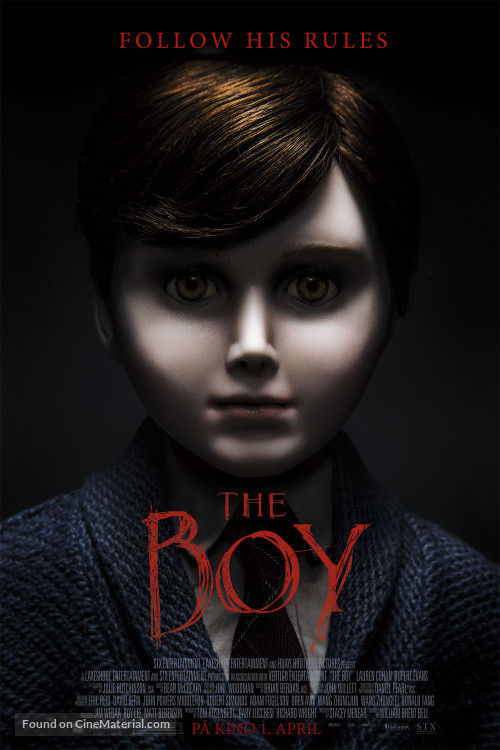
Oh deary me...

And Annabelle...

For goodness sake...
Now, I always liked dolls, but both films make you reconsider your life choices about having them in the house. As it's me, I got to thinking about art (and making sure the doors were locked)...

So much hair...
The Victorians loved dolls.  Massive china ones, little baby ones, painted faces and rolling eyes, the fancier the better. An icon of childhood, little girls were pictured with mini versions of themselves, or idealised adults in miniature, all stiff and smart and static. When you start looking, these little china 'mini-me's are everywhere...

Young Girl and her Doll Kate Perugini
You'll be unsurprised to learn that a great number of doll pictures involve a little girl wearing lovely clothes and looking cute.  Kate Perugini (wife of Charles Collins, then Charles Perugini, and daughter of Dickens) gives us a very well dressed little lady in one of those puffed-up mop caps you see in paintings of rich people's children, such as Millais' Cherry Ripe. That in turn is referencing Penelope Boothby by Sir Joshua Reynolds, a portrait of an adorable, ill-fated poppet.  Lewis Carroll took photographs of Xie Kitchen dressed as a rather disturbingly Lolita-ish version of Miss Boothby, which is more about the perils of attempting to dress a pubescent young woman as a little girl rather than a reflection of Carroll's taste.  Let's move on...

Alice in Wonderland (1879) George Dunlop Leslie
Here we go, this is much less dodgy ground.  I really like this painting, something about the poses of the the mother and child and the stripey sofa - it's a very satisfying image.  A mother reads Alice in Wonderland to her daughter (back to Carroll again), or is the little girl called Alice and she is in a sort of wonderland as her mother reads to her.  I hadn't really spent much time considering the doll - does it represent Alice falling down the rabbit hole?  It looks very much like the little girl, so is it a play on Alice being smaller and bigger?

Annabel and her Toys (1912) Harrington Mann
Harrington Mann seems to have done quite a number of paintings of girls and their toys, which is a weird thing to specialize in but we all have to make a living.  The disarray of playthings around her feet might signify the riches Annabel's family enjoys, or the opportunities on offer because of her position in life.  More likely it's about the fact that no matter what surrounds her, Annabel's only opportunity is to become a mother, have a little Annabel of her own.  I suspect the doll is wearing a christening gown (which are unfeasibly long and impractical) - maybe it is Annabel's own gown?  The mother in me does want to shout 'look at the state of your room' when looking at this painting...

The Tea Party Agnes E Walker
Moving on from an accessory in portraits, dolls often appear as part of a tableau.  Here we have a little girl holding a tea party.  The dolls on the chair seem a bit rambunctious but I like to think this painting could be titled 'It's not a party until the tiny horse arrives'.  The staging of the dolls up high, then down to the girl, then down to tiny horse, draws the eye nicely down the canvas but also sets up a sort of hierarchy.  The girl seems to be playing maid to the dolls. If the dolls don't get their tea on time there will be hell to pay, thinks Tiny Horse.

Girl in Blue Dressing her Doll James Crayer
Again, an image of a girl playing maid or mother to her doll, this time dressing her up.  She has abandoned her book, just seen peeking out from that icy blue skirt, so that she can play, hinting that girls and reading just don't go together.  Everyone knows that reading overheats the female brain and what we should really be doing is practicing for motherhood.  Or something.  Anyway, I like to think that it is a comment on parenting books, which are by and large a waste of time and money.  Until I write one, which will be marvellous and probably entitled 'I've forgotten how to sleep lying down'.  Actually, that is the least filthy and honest of the titles I have in mind, some of the others refer to stitches, sneezing, hand mirrors, crying in Waitrose and 32 hours of labour.  Let's move on.

Girl Making Clothes for a Doll Philippe Francois Sauvage
There is an interesting contrast between the china doll and her new clothes and the girl in her slightly more rustic surroundings.  Everything and everyone is neat and tidy but the dressing of the doll in her bespoke wardrobe is definitely aspirational, as if the girl is living vicariously through her doll. This is not a little girl in a nice household looking at a reflection of herself, this is a girl making do and being creative.  My grandmother used to make clothes for my Sindy which were the height of 60s and 70s fashion.  My Sindy doll used to go about dressed up like Margo from The Good Life.  Marvellous.

Playing with Dolls Mary Louise Gow
This is somewhat posher, but I'm not sure I like how needy the doll in the pink is.  Is this a comment on favourites, a mother showing favouritism to one child over another?  Little Miss Blue Bonnet is getting all the attention, and she is almost literally a reflection of her owner.  There is no bonnet for Miss Pink.  Oh deary me.

The Tȇte-a-Tȇte Tea George Bernard O'Neill
Sometimes it seems that a doll can stand in for a friend when there are none others available.  Maybe it's something about their inability to argue that makes them perfect companions, and their inability to talk makes them great to confide in and gossip with. This little girl is telling dolly all about what she saw the girl at number 38 doing last Thursday afternoon.  Scandalous.

The Secret Emily Crawford
Whatever the girl in pink is confiding to her friend will be all over the nursery before supper.  The doll is just waiting until the girls have to go to tea before spreading the gossip. There's a cuddly badger on the shelf who is really judgmental.

Hearts of Oak (1875) James Clarke Hook
Outside the confines of the nursery, the doll's life becomes a little more precarious.  No-one has noticed that the skittle-like doll has been thrown from its little truck.  It must be hard work being an ominous portent and as we are by the sea, near some little boats, I wonder if the father is a fisherman who might not be coming back from his next trip.  Never mind, Mummy will just carve them a new daddy, apparently.  

Repairing the Doll (1867) Alexander Burr
I suppose it is inevitable that dolls get broken.  We have a spate of running repairs on various things in our house, but mercifully stuffed animals (Lily's favourite) can be easily stitched back together. China, wood and other breakable materials must have made solid toys but when they broke it was a skilled job to make them right. 

The Broken Doll (1895) Pedro de Vega Munoz
Broken dolls call for elderly gentlemen to fix them.  In both the pictures above, the doll has been taken to Granddad (or Dad, life was hard back then) for repair.  Grandfather would have been a skilled man, able to make and mend a wooden doll.  In the second picture you get the idea that the doll is a little bit of brightness in the dark house, with her little pink dress.  In a way she is like the leggy pot plant by the window, something that serves no purpose other than provide some pleasure which seems in short supply.

The Old Doll Pierre Oliver Cooman
This is possibly the most horrific painting I've seen for a while.  It took me a while to notice the little hammer in the girl's hand.  The pair are sitting on animal skins possibly hinting at the vicious nature they are suppressing.  Something tells me that dolly's lost leg was not an accident and they are not mending her - look at the way that the child on the left is holding her arm.  It looks like the doll is being restrained and tortured.  Lawks, I'm not sure I'd want that on my wall.

In the Morning Room (1905) William Rothenstein
In conclusion, the more you look, the less innocent dolls look.  They are a reflection of our nature, for better or worse.  They show us to be caring, industrious, vain and cruel.  Girls cradle them, dress them and worry over them when they are injured.  Through their treatment of their dolls they show their willingness and fitness to be mothers, their ability to care for others, often at the expense of their own position and comfort.  In light of this, the two girls pulling the doll apart are either monsters or critics of the patriarchal oppression that forces them into such narrow roles.  Or something.  Anyway, if we are to look on the bright side, the doll stands for the limitless capacity for love which is not learnt but innate.  Often the male counterpart is dressed for battle, like our little native american brave above, or holding toy soldiers.  It would be tempting to speculate the the male and female character is thus summed up as creation and destruction, life and death, war and peace.  Therefore, returning to the films I watched, when we imagine a doll to be malicious, what does that say about our parenting skills? I dread to think...
Kate Matilda Bentley Fred Brown
On that note, can I suggest you read 'The Dressmaker's Doll' by Agatha Christie, a perfect reflection on the nature of dolls and our relationship with them.  Plus, it's damn scary too and Annabelle rips it off something rotten.  Oh, and out of the two films I saw The Boy is eminently the better and the doll is not quite as disturbing. 

Not quite....

Friday, 27 May 2016

Review: Alice Through The Looking Glass

As you know, I am a big fan of Alice in Wonderland by Lewis Carroll.  When Disney made the first of the new Alice films a couple of years ago I was delighted.  Until I saw it.  Then I was puzzled.  I could not understand why they would call the film Alice in Wonderland when it was not the book and more to the point I was worried people would think that was the story Carroll wrote rather than read the book itself.  Anyway, I got over myself and now am okay with it.  Well, sort of because I still don't understand Johnny Depp's random Scottish accent or the dance at the end. Anyway, when they announced they were making Alice Through the Looking Glass I was obviously curious...


So, today being the 27th May, we took ourselves off to the local multiplex and here is my review...

Alice Through the Looking Glass illustration by John Tenniel
Firstly, a summary - We join Alice as she is captaining a ship through rocky seas pursued by pirates. Back in London she returns home (in trousers and without a hat, but I'm coping with that in my own way) and her mother informs her that in her absence things have been going somewhat wrong. Time is moving on and things are not improving for the family but Alice is convinced that she, a trouser-clad female ships captain can only succeed in Victorian society. Hmmmm...

The Hatter, still a touch mad (and Scottish)
I don't think it's much of a spoiler to say that it does not go well and Alice takes refuge in Wonderland once more, seeking out her old friends only to find that things are not going any better there.  Hatter is fading fast and the only thing that can save him is a reversal in time, but Time himself is not about to let some funny dressed girl mess about with his cogs.  Also, Alice is not the only one who wants to turn back time...

Is Time a Thief and a Friend to No-one?
Anyway, much high jinks and revelations ensue, including an explanation about the size of a certain person's head.  We race from past to present, from London to the seas of Time via an asylum, to discover what is true and what isn't.  Like the first film, the visual experience is astonishing, each part of Wonderland gloriously rendered and filled with characters, some new, some very familiar...

Off with their heads!
In order to enjoy Alice Through the Looking Glass you have to let go of any thought that it is related to the book.  Both of the new films are beautiful, funny, and exciting and are an intriguing use of the characters and the idea of Wonderland. The special effects are very special and everyone is acting their socks off.  Some bits are genuinely moving beyond what you would expect and you will leave happy.  However, the purist in me is sad that the point of the books is missed - Alice doesn't belong in Wonderland, she is constantly puzzled and contradicting everything and everyone.  It is not meant to make sense or make her feel at home.  I have always suspected Carroll was making a point about how he felt in the normal world, how he never felt he could fit in nor understand what everyone else considered 'normal life'.  It is absolutely Alice's feeling of utter bewilderment shared with us as the reader which is Carroll's way of showing us what his life is like.  Looking Glass has been interpreted as a very pointed attack by Carroll at being excluded from the society in Freshwater (Red Queen being Cameron, the White King being Tennyson etc) which I find deliciously true.  Carroll writes what it is like to be an outsider and it's a shame that isn't translated onto the screen.

Terrifying Chess!
In conclusion, if you liked the first one, you'll like this one and there is much to like.  Helena Bonham Carter once more proves why she is a national treasure and the bits in Victorian London are full of actors who will leave you saying 'Oh it's her/him...'  There are enough references to the original books to cheer you up if you are sad about the deviations and hopefully it will draw people to the original source material.  All in all a jolly couple of hours and an escape from all the politics which can only be a good thing.

Alice Through the Looking Glass is available nationwide from today.


Thursday, 22 October 2015

Book Review: The Looking Glass House

I am in the very pleasant position of having a bevy of books on my desk to review, so I ought to crack on with it before my own is out!  Today, I bring you a familiar tale from an unfamiliar viewpoint…


The Looking Glass House has a very unique selling point to recommend it. The author, Vanessa Tait, is the great-granddaughter of Alice Liddell, the inspiration for Alice in Wonderland, and she presents us with the story of Lewis Carroll’s friendship and then desertion by the Liddell family, but from the viewpoint of the governess, Mary Prickett.
 
Mary Prickett (unknown photographer)
If you have been following the fashions in Carroll-interpretation then you will be familiar with the notion that instead of desiring the formidable girl-queen Alice, it was actually the ever-present Miss Prickett that Carroll was paying court to, but with most things to do with the ever elusive Reverend Charles Dodgson, nothing is clear-cut.  In Tait’s story, she presents us with a governess, surely one of the loneliest jobs in Victorian England, in a city full of riches, all of which are denied her.  Into her life comes the gentle, unusual bachelor, Dodgson, who deplores the rough physicalities of life, who captures the pure wonder of beauty and who also captures Miss Prickett’s eye.  What could possibly go wrong?
 
The Liddell sisters, Edith, Ina and Alice (1858) Lewis Carroll
The book itself is beautifully presented.  I am a sucker for book design and the positive/negative silhouettes and references to Wonderland on the cover are nicely judged. The characters of Wonderland are sneaked in to the cover and the text both obviously and surreptitiously, such as with touches like the ‘Fat-Ten-U’ medicine that Mary considers to plump her figure.
 
Alice as the Beggar Maid awaiting her King Cophetua (1858) Lewis Carroll
The character of Alice is probably one thing that will draw readers to the book.  What exactly was going on there?  And will we ever know? The problem I have with the whole Dodgson and Alice affair is that is almost impossible to look at it in an unbiased manner now as so much information and presumption has happened in the last 150 years.  I suspect the advent of the internet, not to mention photoshop has not helped matters one little bit, causing things like this to happen…

Take this photograph of Lewis Carroll...
Add this photograph, presumably a father and daughter
And together with the 'Alice' from the Sisters picture above,
Hey presto, call Project Yew Tree....
Whenever I discuss Alice Liddell with people, perfectly intelligent, rational people, you will get at least one person who will throw up their hands and declare Dodgson was a paedophile.  It is a very easy step to take given his desire to ‘collect’ little girls in photographs, some of which are utterly unpalatable to our modern eyes.  The thing I found refreshing about Tait’s book is that this whole situation is not only handled within the narrative without our modern assumption, and also the facts, such as we know them, are covered in a postscript at the end, covering the author’s family history.  You would think Tait would attempt to portray her family in the most favourable light but it seems an honest telling of a little girl’s caprice, a mother’s folly and a man at odds with society, getting things wrong.  Re-reading Alice in Wonderland as an adult (which I periodically do) it is actually tempting to see Dodgson as Alice, seeing society as nonsensical and dangerous, full of terror and humour and unfathomable mysteries which could get him into trouble.
 
Grace Weld as Red Riding Hood (1857) Lewis Carroll
The image is referenced in the novel
I really enjoyed The Looking Glass House and have no hesitation to recommend it to you.  Even though to most of us, the outcome is already known, by using Mary Prickett, Tait allows us to see everything, all the familiar stories, from a different viewpoint.  Like fictional Alice, Mary seems to struggle to negotiate the fantastical society where you could equally meet a queen as a dead swan and have to automatically know how to react to each.  I found her handling of the everso-easy-to-judge Dodgson to be both sympathetic yet honest and Alice, who is easy to be typecast as either a victim or a monster, is shown for what she is, just a little girl. Add to your Christmas list or sneak onto your Kindle, either way, this is pleasurable reading for a Victorianist at Christmas.

The Look Glass House is available to buy now from Amazon UK (here), to preorder USA (here) or at a bookshop near you...

Wednesday, 15 April 2015

Photographing Alice (and Ina and Edith)

Once upon a time there was an old lady who lived on the south coast of England.  She had a secret, which as it turned out wasn't much of a secret no matter how hard she tried.

Mrs Reginald Hargreaves
When the old lady died, her ashes were buried by the war memorial that held the names of two of her three sons.  On her gravestone her secret was revealed...


Alice Hargreaves, or Alice Liddell as she is more famously known, died in 1934, 72 years after the writing of a story that would make her immortal.  When she was an old lady she became famous again, her photograph filling the papers as the world found out what had happened when the magical little girl had grown up. Once more her face was the subject of interest and record, just like when she was a little girl.

Perhaps then we have started at the wrong end of the tale.

Once upon a time there was a little girl who lived in Oxford.  Her name was Alice...

Alice Pleasance Liddell (c.1860) Lewis Carroll
Plenty has been written about little Alice, her sisters Lorina and Edith and a boat trip they took with a serious young man called Charles Lutwidge Dodgson (also better known as Lewis Carroll).  Dodgson was a friend of Alice's older brother Harry and Lorina, but when Harry went up to school, younger sisters Alice and Edith joined Lorina on her outings with the young man.  Dodgson wrote the story of Alice's adventures underground as a way of entertaining the girls on trips and in the tales he created a version of Alice who is curious, questioning, brave, obstinate and caught between trying to leave and trying to see more.

The Beggar Maid (1858) Lewis Carroll
When awkward Dodgson became Lewis Carroll, author and photographer he transformed himself in the same way as he transformed his most famous subject. Under his lens, Alice is a beggar maid, a ragged creature of pity.  In other photos, she is also a plush cat on a cushion with her equally silky sisters, as far from the beggar maid as you can imagine...

Edith, Lorina and Alice Liddell (1858)
Slipping by most people's notice was always Lorina, eldest sister and foremost friend of the young author/photographer.  When Dodgson was expelled from the Liddell family circle, a very twentieth century interpretation was placed upon it.  To our modern eye, some of the photographs look decidedly iffy: a young half-naked girl looking challengingly towards the camera, but are defended by many as being typical of contemporary art, coupled with knowledge that the mother was present when the majority of the pictures were being taken.  I say the majority for a reason, because there exists a very NSFW image of Lorina which is now argued to be the cause of the rift between the Liddells and Dodgson.  It was featured in the recent documentary on Dodgson and can be seen online and is of a very naked teenage Lorina and has no pretense of art at all.

Alice as The May Queen
Lorina (c.1860)
It is interesting to note that Alice is often playing a part in Dodgson's photographs but Lorina just sits there as the subject of that picture. It's almost as if Lorina does not need to play a part, she is the subject he wishes to take the picture of.  Alice, however, was dressed up, transformed, posed, a range of characters including the most enduring, that of 'Alice' which she was to be reminded of for the rest of her life.

The Sisters (Edith, Lorina and Alice Liddell) (1864) William Blake Richmond
Away from Dodgson and his interpretation of the sisters and Alice in particular, the Liddell girls found others who wished to capture their beauty.  Around the time of Alice's Adventures in Wonderland, artist William Blake Richmond showed the sisters in a similar triangular arrangement to the above photo, with Lorina as the pinnacle. Although the two youngest still appear quite innocent and childlike, Lorina had begun to look more knowing and grown up.  It is unsurprising that Mrs Liddell, nicknamed 'the Kingfisher' after her desire to wed her girls to royalty, would want to separate her daughters from the poor young man who spent so much time with them.  Improper intentions or not, young Mr Dodgson did not have good enough prospects for Mrs Liddell.  The final picture he took of Alice is rather a melancholic piece...

Alice Liddell (1870)
At 18 and a marriageable age, Alice had to say goodbye to her childhood friend and concentrate on her future.  The notion that Dodgson was cast out for evermore isn't quite true but he did separate from the family for 6 months after which his relationship with the Liddell parents was cooler. He and Alice must have remained on good terms as Dodgson acted as godfather to her second son.  He didn't take any more photographs of her though, that mantle was taken up by another.

When the Liddell family moved from Oxford to the Isle of Wight in the early 1870s, they rented Whitecliff House, not far from Dimbola Lodge.  Naturally they caught the attention of Julia Margaret Cameron who was ever vigilant for new models. In the Liddell sisters she found young ladies of experience...

King Lear Allotting His Kingdom to his Three Daughters (1872) Julia Maragret Cameron
All three girl, from the left Lorina, Edith and Alice, surround Julia's husband, Charles Hay Cameron.  His dark drapery and age contrasts with their youth and beauty, and they appear satellites around his presence.  It's unusual to see the girls posed with another person, no longer so insular and separate.

Pomona (1872) Julia Margaret Cameron
Cameron also took some startling solo pictures of Alice.  Pomona has echoes of Dodgson's beggar maid, a mirror image of the pose taken by a woman rather than a girl.  Her expression is one of challenge as she nestles in the tendrils of the garden.

Alethea (1872) J M Cameron
From the same session, Cameron references her own work, this time "Call I Follow, I Follow, Let Me Die!" of 1867, with the female figure in profile, her hair fanning out behind her. Rather than being a goddess like Pomona, Alethea refers only to 'truth', interestingly looking away.

St Agnes (1872) J M Cameron

St Agnes (1872) J M Cameron
In this pair of images, Cameron portrays Alice as St Agnes, patron saint of chastity, gardeners, and girls, amongst other things. Rather than being posed with a lamb, Cameron chose the other attribute, a palm, as no doubt it kept stiller than lifestock. My favourite has to be Ceres, goddess of the harvest, fertility and motherhood. She is a beautiful plant in the wild tumble of nature, the white flash of her flesh echoed in the sweep of grain crop against her shoulder. Alice makes a fine model for Cameron, with her strong defiant features a perfect addition to Cameron's other images of young, handsome women.
Ceres (1872) J M Cameron
Even before her marriage in 1880 to the cricketer Reginald Hargreaves, the public photographs ceased.  The early and sudden death of Edith in June 1876 traumatized the family and drew the sisters together in grief.  I don't think it's a coincidence that the remaining sisters could not find the will to be the same as they had been.  When they had posed, it was often as a trio, even if there were subsequent solo images.  Now that triangle had been broken, the ones left behind did not assume the role of muses without the one who had vanished from view. Alice Hargreaves (nee Liddell) would always be little Alice, tumbling down a rabbit hole on a boating trip with her beloved sisters. Alice, Edith and Lorina Liddell were each immortalised (to differing degrees) by Dodgson and Cameron, as a trio of sisters made extraordinary by the inspiration they lent to others, but it is arguably a mistake to imagine that the images we see are mere portraits of the girls.  Just as Carroll's Alice is not Alice Liddell, then the little girls in the photographs are a complex mixture of surface and meaning that is dangerous to confuse. Maybe in understanding that it becomes clear why Mrs Reginald Hargreaves sought to separate herself from the images and text that drew on her as inspiration. She was Alice no more.

But then maybe she never had been.