Showing posts with label Florence Beatrice Anson. Show all posts

Thursday, 13 December 2018

Thursday 13th December: Florence Beatrice Anson

As I talked about in Tuesday 4th December's post on Ruby Streatfeild, researching the peerage is a damn sight easier than some friendless seamstress, no offence to friendless seamstresses obviously.  Also as I mentioned with Ruby, she was related by marriage to today's lady, Lady Florence Beatrice Anson. 

Florence Beatrice Anson, c.1864
  Lady Florence Beatrice Anson came into the world on 12 August 1860, eldest daughter of the Earl of Lichfield, Thomas George Anson.  There were a great number of Anson children born between 1856 and 1877 at the family seat of Shugborough Hall...

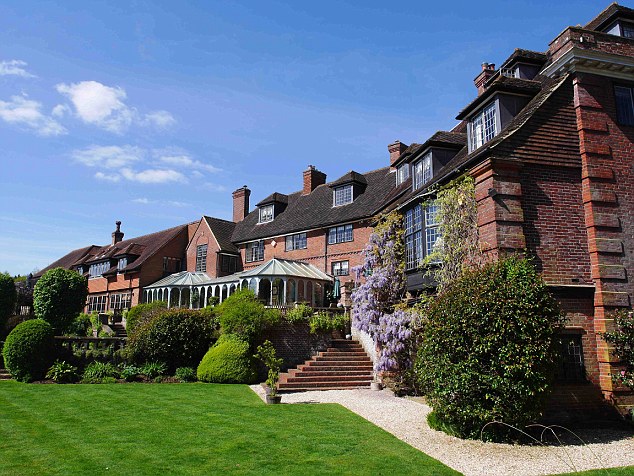
Shugborough Hall, and very nice too
The Anson family split their time between their little place in Staffordshire (above) and the very well appointed Dover Street in London.  Of course, when in London, they moved in their society circles which included the family of 3rd Earl Somers.  He had married Virginia Pattle, so the inevitable happened...

Florence Anson (1866) Julia Margaret Cameron
I read that Isabel Somers-Cocks, daughter of Earl Somers was very sheltered and not allowed much society with other children.  She appears to have gone infrequently out to events with Florence Anson and the pair are often listed together at royal occasions during the season.  Aged six, Florence and her brothers Claude and possibly Frederick or Henry posed for Mrs Cameron.  Cameron found Florence very inspirational and I have to admit for a child of six, little Florence seems far older with her large, soulful eyes and delicate face.  I wondered if the photographs were taken in London or Freshwater but the following seems to decide the matter...

Days at Freshwater (1870) Julia Margaret Cameron
I'm taking this to be literally Freshwater, and the Anson children (Claude, aged 6, on the left, ten year old Florence and 13 year old George on the right) are the epitome of the elegant beauty of the place.  Cameron used Florence to represent nameless ideals of feminine beauty as the little girl grew towards teenagehood.

Florence Anson (1870) Julia Margaret Cameron
She has a delightfully mournful expression, seemingly without trying, and her downcast, sad eyes manage to look innocent and haunted at the same time.  They are arguably the pinnacle of Cameron's child portraits, with ten year old Florence echoing the poses and expressions that May Prinsep or Mary Hillier would also perform.

Florence Anson (1868-9) Julia Margaret Cameron
As Florence grew older, she attended many society events, including attending court events which is probably how she ended up as bridesmaid to Queen Victoria's youngest son, Prince Leopold when he married Princess Helena of Waldeck-Pyrmont in 1881.

Bridesmaid portrait, published in the commemorative Illustrated London News
Prince Leopold was the youngest son of Queen Victoria, and held very close by his protective mother due to his haemophilia, but despite the search to find him a bride that his mother approved of, he finally married a fellow royal from a European family, at Windsor Castle.  A royal portraitist was engaged to paint an image of the event...

The Marriage of the Duke of Albany 22nd April 1882 (1885) Sir James Dromgole
Florence is one of the beautiful girls in attendance, but the painting took a long time to complete, so long that sadly it became a memorial to the prince who died only two years into the marriage.  He slipped and fell while in Cannes for his health and hit his head.  He died of a cerebral haemorrhage the next day.

It's that moustache again!
Florence was married in August of 1885, having become engaged in February of the year before.  Her husband was Captain Henry Streatfeild, son of Colonel Streatfeild of Chiddingstone.  Ruby Streatfeild was one of her bridesmaids, being sister of the groom.  The wedding party contained most of the artistocrats of England with more Viscounts, Duchesses and Honorables than you could shake a stick at.  They went on honeymoon to Bowood House in Wiltshire, where my mate Lisa had her wedding reception and very nice it was too.  As Bowood House is the seat of the Marquis of Lansdowne, the couple obviously knew the family and there is a photo of Florence with the Marchioness of Lansdowne, who was her friend...

Marchioness of Lansdowne and Florence
Impossibly small waists aside, Florence had a pretty normal life, which I'm sure is a relief to all of you.  Her husband was a captain in the Grenadier Guards (which he had joined from Eton in 1876), moving all the way up the ranks until he became Colonel by 1911, when the couple are listed as living at Hoath House, Chiddingstone, Kent.  Their son, Henry Sidney John Streatfeild was born in Ottowa in 1886 while his father was working there.

Hoath House, and very nice too.
Henry kept getting honours, such as the Royal Victorian Order (member 4th class, 1902), Groom in waiting to the king, as well as being ADC to the Governor General of Canada, the Viceroy of India and the Lord Lieutenant of Ireland and saw active service in the Boer War.  In the First War World, Henry was taken out of retirement and became a staff officer for the duration. Before his death in 1938, he sold the family village of Chiddingstone to the National Trust, which seems about right.  His son, Henry, inherited the family wealth, but Florence, then in her 80s, was not doing so well.

Holloway Sanatorium, Virginia Water, Surrey
In the 1939 census, Florence is a patient at Holloway Sanatorium, a private mental hospital.  She died on 25 September 1946, and although the mentions of her last year are very discreet, her place of death is registered to 'Virginia Water' so it is possible that she was still at Holloway.

Florence was buried beside her husband in the family plot at Chiddingstone, not far from fellow artist's model and sister-in-law Ruby Colville (nee Streatfeild).  It's a small world, especially in the world of upper class Victorian ladies.

See you tomorrow.


Tuesday, 4 December 2018

Tuesday 4th December - Ruby Streatfeild

I would like to correct the statement I made yesterday when I said I loved it when I got to research someone with an unusual name as it made it easy to research.  What I should have said was I really love it when my subject is amazingly rich and privileged.  They are marvellously well recorded and make my life a breeze.  Hurrah for the aristocracy!  Anyway, on with today's subject...

The Captive (1882) John Everett Millais
Look at those sleeves! This gorgeous piece is a fancy portrait of Miss Ruby Streatfeild of Chiddingstone Castle, but not actually done for the family as it was sold in pretty short order to the Art Gallery of New South Wales in Australia.  In Life and Letters of John Everett Millais (1899) by the artist's son John Guille Millais, the model is identified as 'Miss Ruby Streatfeild now the Hon. Mrs Colville'. Thank you to Millais junior, that's all I need to do a bit of digging...

Chiddingstone Castle, Kent
The Streatfeild family are probably known to you because one member of this illustrious clan was the novelist Noel Streatfeild, author of Ballet Shoes.  Anyway, in this very lovely corner of Kent lived Henry Dorrien Streatfeild and his wife Henrietta and their enormous family. Ruby, born in 1866, was one of the couples last children and she had siblings who were 12 years older than her (plus two younger siblings, including her sister Ivy). Of Ruby's siblings, I first draw your attention to Henry, born 1857 and destined to become a colonel with a magnificent moustache...

I say!
 Henry married Florence Beatrice Anson in 1885, and just in case you were wondering why you knew Florence's name, it's because she is this young lady in the middle...

Days at Freshwater (1870) Julia Margaret Cameron

It's a small world, isn't it?  Florence appeared in a few of Julia Margaret Cameron's pictures, but I won't say anymore now in case I end up covering her later in the month.  Anyway, I will also mention Ruby's much older sister Violet, or Lady Henry Nevill, as she became in 1876. There actually was only three girls in the Streatfeild family - Violet, Ruby and Ivy - and so the sisters seem to have been close.  Indeed, before marriage and later in life, Ivy and Ruby seem to have attended social events together.  Anyway, when Ruby was only 14 years old, her elder sister died.  Violet had given birth to Geoffrey, her third child and second son on 6th April 1879 but he died only 8 days later.  Violet's health seems to have suffered over the following 18 months and she was advised to stay in the south of France, then in Bournemouth but she didn't recover.  On Christmas day, 1880, she died aged only 25 years old.

It might have been the loss of Violet that prompted the Streatfeilds to ask family friend, and frequent visitor to Chiddingstone, John Everett Millais to immortalise their daughter.  Whatever the reason, Millais did not limit himself to a traditional portrait (even though the painting is equally known as 'Ruby' to the contemporary audience) but shows an exotic slave girl, all dolled up in Eastern finery, at odds with her very English face.  The narrative presumably is, given the title 'The Captive', that Ruby is a victim of that accursed white slave trade we all know so well (see here for how you can get involved) which was very fashionable at the time but not the sort of aspirational portrait you might like for your daughter.  Anyway, it is also a notable painting for another reason.  According to the Art Journal of 1885, it was the 'first subject painted by [Millais] with the aid of spectacles; in consequence probably it is remarkable for the delicacy of its execution.'

Not long after the painting was exhibited, Ruby became engaged to, and subsequently married, Charles Colville, 2nd Viscount Colville, the only child of Lord Colville of Culross.  She wore a dress of white Bengoline ribbed silk and Brussels lace tuille veil, with a wreath of natural orange blossom.  She had six bridesmaids including her sister Ivy and her sister Violet's daughter, Joan.  The couple lived in London, where her first two children were born, but after the death of her father in 1889, the family, together with Ruby's brother Eric, set off for Canada to live in Ontario for a while, later home to Ruby's son John.  By the 1901 census, the family are back in the country.

Millhanger, Surrey
In a very rock and roll twist, in the 1911 census the family is living at Millhanger in Thursley, Surrey.  This wonderfully sprawling home was also the home of Roger Taylor from Queen (obviously not at the same time) and was built around 1907 by Arts and Craft architect Harold Falkner, possibly making the Colvilles the first owners.

The rest of Ruby's life was fairly uneventful.  She travelled to and from Canada a few more times with her husband, and then after the death of her husband, with her son John who lived there until his retirement.  She became the Dowager Viscountess Colville, and took to good works, which became War Works after 1939.  In the census of that year, she is listed as living in Danegate House, near Tunbridge Wells, where the family had moved in 1924, with son John and a vast staff.  She died, aged 77 in the gloriously named Baggy End in Devon while staying with John in his seaside home.  She left a whopping great legacy of £39,000 to her beloved son and was buried back at the family seat in Chiddingstone in Kent.

See you tomorrow.