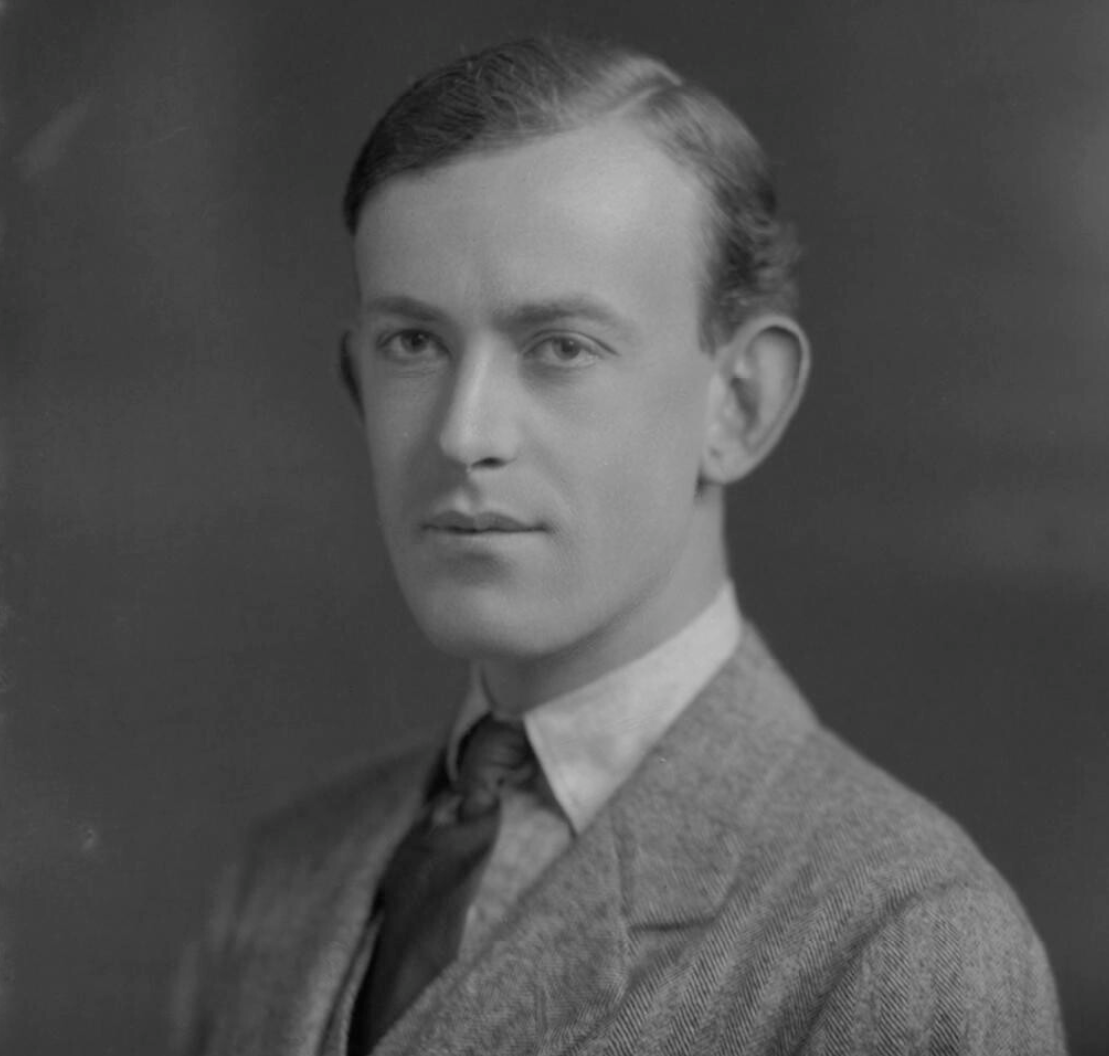
You might well remember back in 2023 I wrote about Mrs Byam Shaw, otherwise known as the artist Caroline Evelyn Eunice Pyke-Nott (better known as Evelyn). At the time, I mentioned her sister, Isabel and I always meant to return to her. Well, three years later, here we are. Meet Isabel Codrington...

Isabel Codrington (Mrs Paul Konody) (1909) Philip de László
Yes, she dispensed with the Pyke-Nott business, hence many people don't link her to the Byam Shaw circle, but as Byam Shaw is a bit of an obsession of mine, I am delighted to rope her in. Plus her art is amazing. Let's start at the beginning.
As I said in this post about sister Evelyn, the Pyke-Nott/Nott-Pyke family were from Swimbridge in Devon. Isabel was the youngest of the five (surviving) siblings, born 27th January 1873, three years younger than Evelyn (and 2 years younger than Edmund, her nearest sibling). There is also a final sibling, Adrian Stephen, who was born and died in short order in 1882. Seeing as the eldest Pyke-Nott child was well into his teens at this point, it must have been a distressing time in the family when the final baby died. Like her sister, Isabel attended Hasting and St Leonard's School of Art, plus a year at St John's Wood Art School before finally attending the Royal Academy Schools. Isabel was only 15 years old at the RA which is impressive. In 1893 she achieved 2 medals, coming first in both painting a draped figure (a category only open to female students) and for a painting of a head from life, described in the Lady's Pictorial as 'a very bold and strong, if somewhat hard, profile study.' It seems that the Lady's Pictorial was a good friend for Isabel, mentioning her student work regularly in the 1890s, alongside that of her sister, so sometimes it can be a little confusing which 'Miss Pyke-Nott' is being mentioned. Evelyn started RA exhibiting earlier (obviously) but in 1896, both Pyke-Nott girls were there. What I found interesting is that Evelyn's address is 4 St Edmund's Terrace, Regent's Park and Isabel's address is 4 St Edmund's Terrace, Primrose Hill - what a coincidence that they both live in street's named St Edmund's Terrace! I might be reading into it but possibly it was the first sign that Isabel needed a little individuality...
 |
| The Bath (1920s) |
Isabel's picture in 1896 was A Vintage (mentioned in the LP, obvs) which was described in the Daily Telegraph in glowing terms - 'There are few, if any, prettier or more harmoniously balanced designs to be seen this year at Burlington House than Miss Isabel Pyke-Nott's "A Vintage" done in that fan shape which provides so many pleasing puzzles for the designer to overcome.' In 1897, the Pyke-Nott siblings were in full force at the RA, with not two but three members of the household present! Isabel had two paintings on show - firstly "I curled and combed his comely head, He look so grand when he was dead" which was based on the Tennyson poem 'The Sisters,' quoting a woman talking of her murder of an unfaithful lover. The World felt this piece was full of promise but that the head on the girl's knee was too big and the paper remarked that in general they disliked when paintings had only quotes for titles as it was a bit pretentious and made it hard to talk about them (as the title took up too much of the column). Her second painting was Iduna and the Eagle, from the Norse myth of the goddess Iduna being kidnapped by Thiazi disguised as an eagle...
 |
| Iduna and the Eagle (1897) |
Her work at this point is very Frampton-esque, very third generation Pre-Raphaelite-Adjacent, Neo-Pre-Raphaelite, post-Burne-Jones, powder-soft loveliness. I have to add that her siblings that year were very family focused with Evelyn showing a portrait of Isabel and James exhibiting a portrait of their mother. The Evening Mail noticed that Evelyn's picture was of her sister-artist and there was a lot of love for the Pyke-Nott family all round. This was reflected in Byam Shaw's painting of his beloved Evelyn in the guise of the Queen of Hearts, with sister Isabel in the background proffering a plate of jam tarts....
 |
| The Queen of Hearts (1896) Byam Shaw |
By 1898, Byam Shaw had made his mark and his more formal portrait of Evelyn was being mentioned quite a lot. Ladies Field had a very suave photo of him attached to an article about his painting technique. Despite Isabel's two paintings at the RA that year, Reverie and Circe, her soon to be brother-in-law got all the mentions, not least because the press were not quite sure what to make of his portrait of Evelyn.

That was not going to improve in 1899. The Lady's Pictorial had a column on the Byam Shaw wedding complete with the above little vignette. Thanks to this article, we know Isabel was wearing a white muslin over silk dress with pink sash and white Trelawny hat (no, I don't know either) with ostrich feathers, and pink roses under the brim. Interestingly, Isabel didn't have any pictures at the RA that year (her sister had two which were pleasingly mentioned in some of the marriage articles). At the turn of the century, Isabel was back, but her address was Porlock in Somerset where her brother James and mother (I won't say parents, for reasons that will become apparent) had moved to. She was still there in 1901 when she married Paul Konody...
 |
| Paul George Konody (1920) William Roberts |
Budapest-born Konody was a journalist (as had been his father before him) and had been naturalised in 1894, aged 22 after moving in 1889. Among his interests was art history, with a specific interest in the Renaissance (he has his own Wikipedia page) so it was art that drew the couple together. Their wedding was the biggest thing to hit Porlock in many a year, reported in great detail in the West Somerset Free Press (everyone's favourite newspaper, obviously). The groom, the editor of the Artist magazine, made his arrival at a few minutes to midday, while Isabel arrived, accompanied by the choir singing 'The voice that breathed o'er Eden.' She wore a dress of crepe de chine over white silk, with her veil held in place by a 'wreath of orange blossoms.' She carried lilies, white roses and orange blossoms, and her jewellery was modelled by 'G M Borglum' - John Gutzon Mothe Borglum was the sculptor responsible for Mount Rushmore, but for a short period between 1896 and 1902 he had a studio in West Kensington, not far from where the Konodys would move after their marriage. Their honeymoon was spent in Florence, of course.
 |
| The Green Bowl (undated) |
I have a couple of questions - Isabel was given away by her brother, even though her father was alive until the 1920s and living in Devon (not Porlock). There is also an entirely other family he suddenly inherits after the death of his wife in 1914, but he might be pretending to be in the family already in the 1911 census where he (possibly) appears as John Ellis (the woman he goes on to marry in 1918 is Lucy Ellis) who has another family of children Arthur, Edith and Mabel. What a pickle, but hold that thought as the apple did not fall far from that tree.
Anyway, Isabel doesn't appear at the RA again until 1903 (as Miss Pyke-Nott, of 17 Wellesley Mansions, West Kensington) but in the meantime she is busy enough, thank you very much, with the arrival of Pauline Evelyn Melisande Konody, born 27 September 1902. Isabel's painting of 1903's RA was Melisande which, as it depicts a mysterious woman embroiled in a love triangle, I thought an odd subject for a post-honeymoon painting (hold that thought) but I'm guessing it was connected with her daughter - possibly she felt inspired so much by the 1893 Symbolist play, she both named her baby and did a painting.
In 1904, at the Groupil Gallery, 5 Regent Street, Isabel exhibited a series of miniature landscapes on ivory of the Italian Lakes, described as delicate and dainty in their execution and colouring. In a similar Italian theme, she exhibited Main Street, Isola di Pescatori, Maggiore at the Royal Society of Miniature Painters exhibition in 1906. Another miniature to arrive in 1906 was a second daughter, Margaret Elvira Louise in March of that year. By the time she reappeared at the Royal Academy in 1908, the family were living at 20 Hornton Court in West Kensington, with Isabel listed as 'Nott, I.C.P. (Miss)' in the RA catalogue. Her picture that year was A Garden near Pallanza, still reflecting her love of Italy.

Evening (1920s)
The 1911 census shows the family in their charming West Kensington home with two servants, Emma Thomas (a nurse for the children) and May Hancock, their cook. Paul is listed as an art critic and Isabel has no occupation, which drives me insane. However, around a year later, the couple got divorced.
In the divorce papers from April 1912 (you know how much I love divorce papers), Paul Konody, the petitioner, stated that his wife was now living at Whistler's Wood in Surrey (apparently so named because Whitler used a gazebo there as a studio, however also spelt 'Wistler's Wood' so who knows?) and all through January, she had been shacked up in the Hyde Park Hotel with a man called Gustavus Mayer.
Gustavus Mayer was an art dealer from Hoboken, New Jersey, but had also lived in Switzerland, Germany, Russia and Austria. By 1911, he was living with his sister Helen at St James Street, Picadilly. Like with her husband, it's presumable that Isabel met Gustavus through art, he might even have bought some of her work in his role as a partner in the famous Bond Street dealers Colnaghi & Co. Paul Konody divorced Isabel and retained full custody of their daughters. Isabel and Gustavus settled in Whistler's Wood and married with absolutely no fanfare or orange blossom in 1913. What I would very much like to know is if she saw Pauline and Margaret regularly, if at all, until they were adults. The girls were sent to boarding school at the Convent of the Sacred Heart in Tunbridge Wells, founded in 1915, where they appear on the census in 1921, but I'll come back to them later...
Back to the art! Isabel reappeared at the Royal Academy in 1914 with A Duke of Old Italy, giving her address as 34 Bruton Place, Berkeley Square, her London address that she used as a studio to store and lend paintings from. She was still Miss Isabel Pyke-Nott, so that raised a question - I was wondering when Isabel Pyke-Nott, or Mrs Paul Konody, or Mrs Gustavus Mayer became Isabel Codrington. After a few quiet-ish years, Isabel Codrington made her debut at the Royal Academy in 1918 with The Haunted Room. There is no mention (that I could find) of her work in the newspapers that year, but in 1919, her painting The Tavern was frequently mentioned in the reports of both the RA and anywhere else she exhibited it. When it appeared at Liverpool (the autumn exhibition, arguably equal in importance to the RA's May show) the Liverpool Daily Post was full of praise for this 'capable work' from 'an artist little known as yet' - she had pulled off a reinvention. Not only that, I noticed that the praise for The Tavern was more than anything Miss Pyke-Nott had achieved, so Isabel stepped into her Codrington Era and never looked back.
 |
| Cantine Franco-Britannique, Vitry-le-Francais (1919) |
The new decade brought Isabel a lot of coverage. To start with, her painting of Cantine Franco-Britannique, Vitry-le-Francais was acquired by the Imperial War Museum after it appeared in their 1920 exhibition of war paintings. At the RA in 1920 she exhibited The Fruit Sellers, much admired by The Gentlewoman who described it thus - 'A far more subtle bit of drama and an even finer bit of handling is Miss Isabel Codrington's "Fruit Sellers" [which they illustrated on the following page]; this is quite the most dramatic rendering of expression and character in the exhibition,' and they went on to describe it as 'a real achievement of paint and passion.' The Surrey Advertiser found it a little sombre but felt it fully justified its place on the line (as we know, the line is the best place to be placed in the gallery as you are not going to be 'skied' or dangled out of view of the viewer.)
 |
| The Tavern (1921) |
By the 1921 census, Byam Shaw had died (I'm still not over it) and so Evelyn Byam Shaw was staying with Isabel and her new husband, as was brother James, all looked after by four servants. Isabel's 1921 RA piece, A Southern Still Life, drew a lot of attention (according to the Surrey Advertiser who were keen to report on all Surrey-related oils at the RA). It was a still life with figures, a format that she excelled in, as we will see, this time featuring a bottle and pan on a table, with two figures playing drafts in the background. She also had a painting chosen by the Canadian National Exhibition for the Toronto Art Gallery, The Tavern, which is apparently similar to how the Chantry Bequest bought paintings for the Tate, although I can't seem to locate it in any of the on-line catalogues of Canadian collections.
In 1922, Isabel's still life was making waves at the Grosvenor summer show. The Daily Express wrote a fascinating article in support of their Daily Express Women's Exhibition at Olympia, which I feel a whole post could be written about, but suffice to say, Isabel was there. The Daily Express rightfully (cough) say that up until 1910-ish, women didn't do art (apart from Rosa Bonheur and Lady Butler, obvs) and those that had a go were rightly derided. However, nowadays, ladies seem to have developed the strength in their little lady hands to hold a paintbrush and so hurrah all round. It was naturally noted that women can't be as good as someone like Sargent, however they have a good go at it. The fact that one of the selectors of these paintings was Laura Knight, one of Britain's best painters, seems to have missed the Express in terms of irony, but she was joined by William Orpen and, interestingly, Paul Konody. That must have been an awkward preview night...

1923 saw Isabel's painting The Witch's House feature in Tatler. She also presented this painting to the art gallery in Hull (now called the Ferens Art Gallery) while it was hanging in an exhibition there...
 |
| Still Life, Vegetables (1923) |
She again appeared in the Daily Express Lady Pictures Exhibition, which I gather was part of a much larger event at Olympia including fashion and make-up and all other things for women. I haven't ever really thought about the shift in market to women after all the men got shot in the previous decade, but I suppose this is the beginning of the 'pink pound' and the idea that women could be massive consumers to be taken seriously (even if you are being a bit patronising about their art at the same time). At the Grosvenor Gallery this year, Isabel showed The Blouse Shop...
 |
| The Blouse Shop (1923) |
I don't know what it is about Isabel's work that makes it so instantly familiar, but this is a highlight. We know what is being said, what is going on, the dynamic between these three women. The colours are glorious and the glints of light are lovely, but there is something very modern about the scene. Not only is it a picture of women going about their lives without men, but also three very un-idealised women. Although you can see the big step Isabel had taken away from her Neo-Pre-Raph roots, I would merrily argue that this is not that big a step from something like Millais' Christ in the House of his Parents (1849-50) where the very 'common-ness' (for want of a better word) of his models caused a panic. Here, the women are recognisably three ordinary women but it is, of course, artifice, the invention of an artist's mind.
She was back at the RA in 1924 with The Old Land Worker, described by the Sutton and Epson Advertiser as 'a relentless piece of realism' which I'm guessing wasn't meant in an entirely complementary way. 1925 brought a piece about her art, with illustrations, to The Studio, and another exhibition in Hull displayed one of her more controversial paintings. I wish I could find an image of Birds of Prey as it sounds extraordinary and raised a few eyebrows in the newspapers, especially as it had been a woman who painted it - a youth is being robbed by a man while a woman looks on smoking a cigarette. Tatler announced her work to be 'as essentially masculine in its sincerity and determination as the work of Brangwen and Epstein; but it is profoundly classic in style.'
 |
| The Kitchen (1927) |
 |
| The Caller (1922) |
We have our cabbage and box of matches but no biscuit tins, but do you see what I was saying earlier about her being the absolute master of still-life-foreground, people-background paintings? Also feminine spaces, especially interiors. Gorgeous. Anyway, The Kitchen had a name change in 1932 when Isabel started calling it The Window and it is also known as At the Kitchen Window and is currently on show at a gorgeous exhibition at the Russell-Cotes on interiors, so you can go and have a look yourself at its loveliness. Anyway, onwards!
 |
| Caroline (1927) |
Tatler also featured her portrait Caroline in a full colour page spread, and I was instantly reminded of the 1970s Brotherhood of Ruralists, it is so timeless.
 |
| The Old Tramp (1928) |
In 1928, Oldham Art Gallery purchased The Old Tramp from Isabel, which the Evening News reported was the 10th painting purchased by a public collection - seeing as ArtUK only has 8 listed, I wonder what happened to the other two. The Old Tramp had been previously exhibited at the Paris Salon and the Royal Society of Portrait Painters. Isabel also had two paintings at the Royal Academy, The Lumber Room and The Match Seller. This increased interest in her work led inevitably to an interview with the artist herself. While researching this post, I noticed that there was an accepted narrative about Isabel that was never challenged - that she married, had children, gave up painting until her children were grown, took up painting again - which simply isn't true and I wondered where it came from. Now I know - I will condense it thus:
Isabel told the Western Morning News, 16th May 1928: I was raised in Devon, but we have since sold the family home (true) Joined the RA at 15 (true) married and gave up painting for 18 years (ummm...) began painting again once her children were grown (well, technically but also no...) I felt I could only start painting again if I had a studio so my husband built me one (would that be second husband?) which was in 1918. I had forgotten how to paint entirely (had you though?) and had to learn all over again but miraculously it worked and now I am super famous (well, okay, I'll give you the last bit).
The piece then goes on to say that Isabel specifically picked working-class people to model for her because they are interesting, but they can't afford to buy her portraits of them. If she painted rich people instead, who could afford to 'boom' the artist (whatever that means), she would 'rank in the forefront of English portrait painting.'
Isabel controlled her narrative and I can understand why as being the accused party in a divorce and losing the custody of your daughters would not make you sympathetic in the 1920s public eye, so she omits details and shapes how the other parts sit and by the end of the 1920s, Isabel Codrington (the brand) was doing great business. Not only that, in 1928 Pauline Konody, 'daughter of a famous mother' (as the Western Morning News wrote) had her own exhibition at Claridges Gallery in London.
 |
| Summer Mist (undated) Pauline Konody |
Pauline made her RA debut in 1926 with Beech Trees and In the Beech Wood, but had already been the subject of a Royal Academy painting when Anna Airy exhibited a portrait Pauline Konody, daughter of P G Konody Esq in the 1916 exhibition. I couldn't find that one, but I did find one by Laura Knight.
 |
| Pauline (undated) Laura Knight |
Isabel's paintings in the 1929 RA were A Vagrant and Zillah Lee, Hawker. I wonder what it was that drew Isabel back to these figures - the contrast with the normally smooth-faced privileged types that normally featured in portraits (herself and daughter included)? The amount of character and experience in their faces and the challenge of capturing that on canvas? Anyway, in the same year, Pauline had The Kingfisher and Chrysanthemums at the RA and gave her address as Wistler's Wood, obviously now living with her mum. I have to admit, I did not know how Isabel's relationship with her daughters went after she left, but I was pleased to see that they were together, Pauline in her 20s, Isabel in her late 50s.
 |
| The Beggars are Coming to Town (1930) |
Isabel's subject for the 1930 RA was the nursery rhyme 'Hark, hark the dogs to bark, the beggars are coming to town. Some in rags, some in jags, some in velvet gowns.' The Sunday Express called it a 'fearless acceptance of the pathos of poverty.' The Daily Express used the picture to make a rather unpleasant modern political point - the beggars these days are increasing in number because of the Labour government, elected the year before, who preferred foreign workers who charge less, putting good, honest English men out of work. Hmm, nothing changes. The Mitcham Advertiser expanded on the subject, saying the central figure, in his faded finery, reaches out his hands helplessly (I'm guessing he is blind) and all around are 'types of deformity and moral dross' - how the poor are poor because of how immoral they are (demonstrating how easily we slip into that sort of objectionable view when times get tough). The woman in the velvet gown causes some consternation - is she beautiful because beauty exists even in squaller? Is she beautiful because immorality can wear a beautiful face? Is she beautiful because everything else is so ugly? Needless to say, this painting seemed to touch a nerve of something unpleasant in the nation's psyche.
 |
| Morning (1932) |
1931 saw The Blouse Shop at an exhibition in Wales and appearing as a picture in the Herald of Wales. Isabel also appeared at the Southport Spring Exhibition, listed under the 'younger women painters' in a review in the Liverpool Daily Post - at almost 60, I'm sure she was delighted to read that (as I am delighted to write it). 1932 saw Isabel's (arguably) best known work, Morning, appear with little fanfare in the spring exhibition in Bradford. The realism of the loaf of bread was mentioned in the Yorkshire Post review, but little else was said and the painting was given by Isabel to the Royal Albert Memorial Museum in Exeter in 1934. I find it both lovely but also disquieting because it reminds me of two other paintings. I'm obviously reminded of Dod Procter's 1926 Morning, which actually has sleepiness in common with another of Isabel's paintings, Drowsy Summer Days (1935)
 |
| Morning (1926) Dod Procter |
 |
| Drowsy Summer Days (1935) |
Beautiful canvases all, and the 1935 work appeared in the Royal Academy as Isabel's last outing there. However, Morning also reminds me of this...
 |
| The Camden Town Murder (c.1908) Walter Sickert |
Bear with me. something about the arm of the woman, hanging out of the bed, looks a little less than natural. Her green pallor, the sliced up food, the knife and the tear in the tablecloth all make me very uncomfortable. I was reminded of the murder of Dolly Henry which possibly would have been still talked about in Isabel's art circle. Like some of her other works, there is definitely a disquieting undertone to her painting, which is genius if intentional, or really, really interesting if unconscious.

 |
| Last Rays (no date) |


.png)

.jpg)